How Often Should You Stop on a Car Trip With Your Dog?
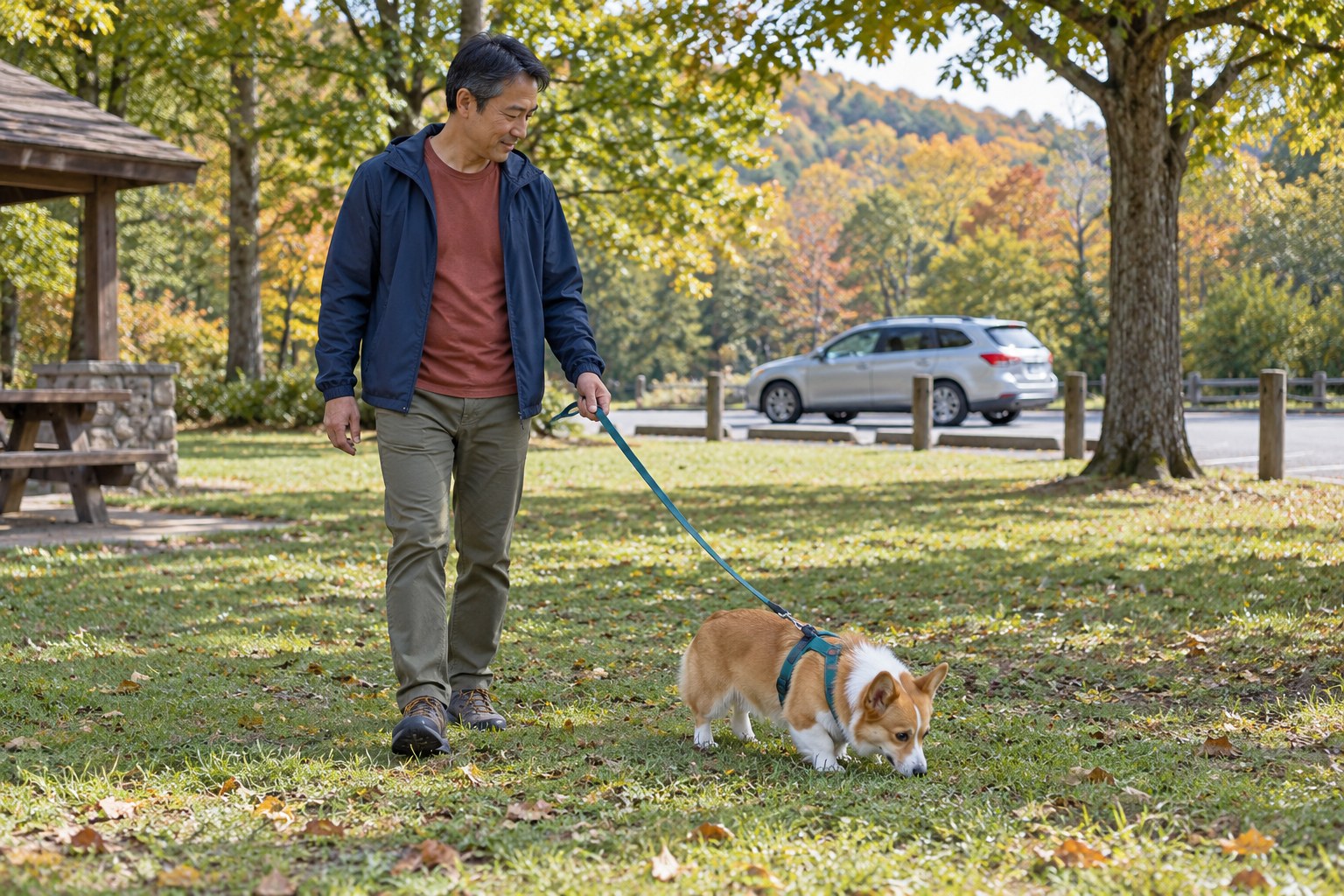
AI-generated illustration of a supervised rest-stop walk.
Plan regular breaks and choose safe stopping places before departure. There is no single interval that suits every dog. Use your dog's normal toilet routine, age, health and response to travel to plan stops, and stop sooner when needed.
In this guide
Build the route around your dog
RSPCA advises regular opportunities for exercise and toileting during travel. That is a planning principle, not a universal maximum time in a car seat. Mark several dog-friendly stopping places and leave time for delays. Puppies, older dogs and dogs with health conditions may need a different plan; ask your veterinarian before a demanding journey. A comfortable bed does not remove the need for breaks.
Choose the stop before opening a door
Park safely away from moving traffic. Prepare a lead and have an adult control it before releasing the travel restraint or opening the exit fully. Use a well-fitted walking harness and keep the dog on lead in unfamiliar places. A roadside shoulder is not a routine exercise area. If a planned stop is crowded or unsafe, use another suitable location rather than rushing the exit.
Give the break a purpose
Offer fresh water, allow a toilet opportunity and take a gentle sniffing walk appropriate to the dog and conditions. Rest is not a fitness session: avoid strenuous activity in heat and do not force an unwilling dog to exercise. Blue Cross recommends carrying water and offering it regularly. Bring a bowl and waste bags, and supervise throughout. Never leave the dog alone in the parked car while the family visits facilities.
Reset the seat before continuing
Check that the travel bed is dry, the cushion has stayed in place and attachment routes are clear. Let the dog return calmly, then refit the restraint according to its instructions. A comfort-seat tether is not proof of collision protection. Keep ventilation comfortable and allow a resting position as well as a window view. The driver should adjust equipment only while safely stopped.
Let observations change the plan
A passenger can note restlessness, repeated drooling, vomiting or difficulty settling. Stop safely to assess a problem instead of waiting for the planned break. Persistent distress needs veterinary advice; breathing difficulty, collapse or suspected overheating needs urgent help. Sleeping through part of a ride is not a reason to extend every interval. On arrival, record which stops worked so the next trip can be planned around real experience.
Common questions
Do I need to wake a sleeping dog at every stop?
Use planned stops to check comfort and offer an appropriate opportunity for water and toileting. Do not extend the journey simply because the dog is quiet; consider its routine and health.
How long should each break last?
Long enough to meet the dog's needs without rushing. There is no universal duration: allow time for water, toileting and gentle movement, and adjust for weather and the individual dog.