Can Dogs Look Out the Car Window Safely? A Better Way to Enjoy the View
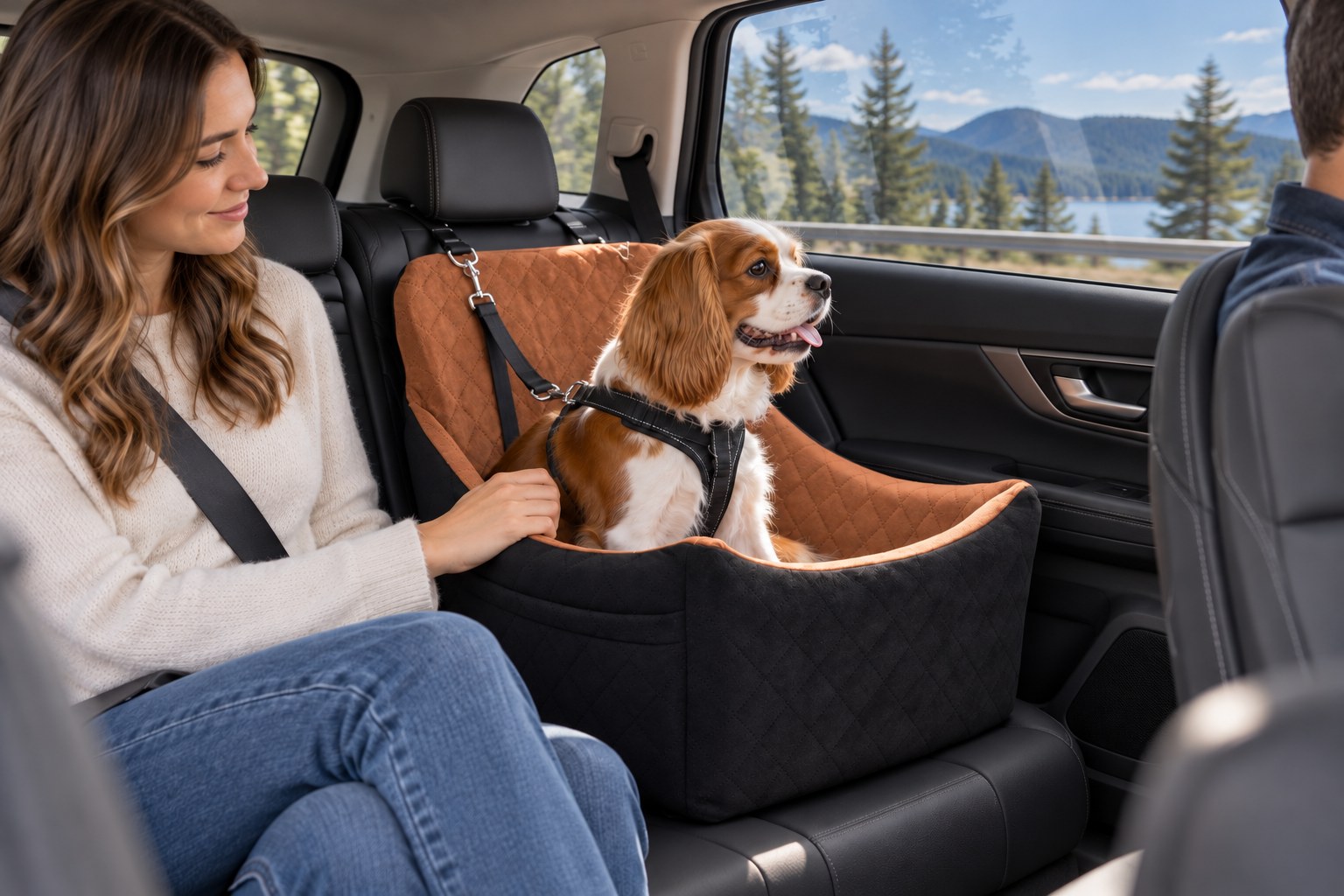
AI-generated scene using the XiaozePet 003M black-and-brown product photo as a design reference; illustrative, not a crash-test or installation demonstration.
Yes—many dogs can enjoy the view while remaining fully inside the cabin. Use the rear seat, an appropriate restraint, a closed window or an opening too small for the dog's head, and a position that does not encourage climbing or leaning out. A view is optional comfort, not a safety substitute.
In this guide
The safe version of window watching
Looking through glass is different from putting the head outside. The AVMA advises keeping a dog's head inside because airborne dirt and debris can injure the eyes, ears or nose. Keep the dog in the rear passenger area and use a suitable restraint or secured carrier. If a window is cracked for ventilation, the opening should be too small for the dog's head. Activate the child lock so a paw cannot operate the window switch.
Choose a view without creating a perch
The dog should be able to sit, turn and lie down within its travel space. Do not raise the dog with loose cushions, boxes or stacked bedding that can slide. Follow the car-seat or carrier instructions and check that the chosen position works with the restraint. A padded elevated seat may improve the line of sight for some small dogs, but padding and height do not prove crash protection.
Watch the dog, not just the scenery
Some dogs look outside briefly and then settle; others become more aroused by moving vehicles, dogs or people. Let a passenger observe while the driver concentrates on the road. Repeated barking, lunging, frantic scanning, drooling, lip licking or vomiting are reasons to reduce stimulation, take a safe break or end the trip. Looking outside, lying down and sleeping can all occur on a comfortable ride, but none alone proves that a dog feels relaxed.
Make the view easier to leave
A comfortable travel setup should allow the dog to turn away from the window and rest. Use calm airflow from the vehicle's climate controls, avoid direct hot sun and offer breaks on longer trips. Never leave a dog alone in a parked vehicle. If the outside view keeps the dog overexcited, try a lower position, a partial visual barrier that does not block ventilation, or a secured carrier introduced gradually.
Test the setup on a short route
Check the installation and harness fit before moving. Begin with a short familiar route and have a passenger note whether the dog can alternate between looking, sitting and resting without struggling against the restraint. Adjust only after stopping safely. Persistent motion sickness, panic or breathing difficulty needs veterinary advice; do not assume a higher view will solve a medical or behavioral problem.
Common questions
Should I open the window because my dog enjoys the wind?
Do not allow the dog's head outside a moving vehicle. Use the car's ventilation system; if a window is opened, keep the gap too small for the head and enable the child lock.
Does seeing outside prevent car sickness?
Not reliably. Dogs vary, and nausea can have several causes. If signs recur, record when they happen and ask a veterinarian for an individual plan.