Dog Won’t Lie Down in a Car Seat? Check the Resting Position
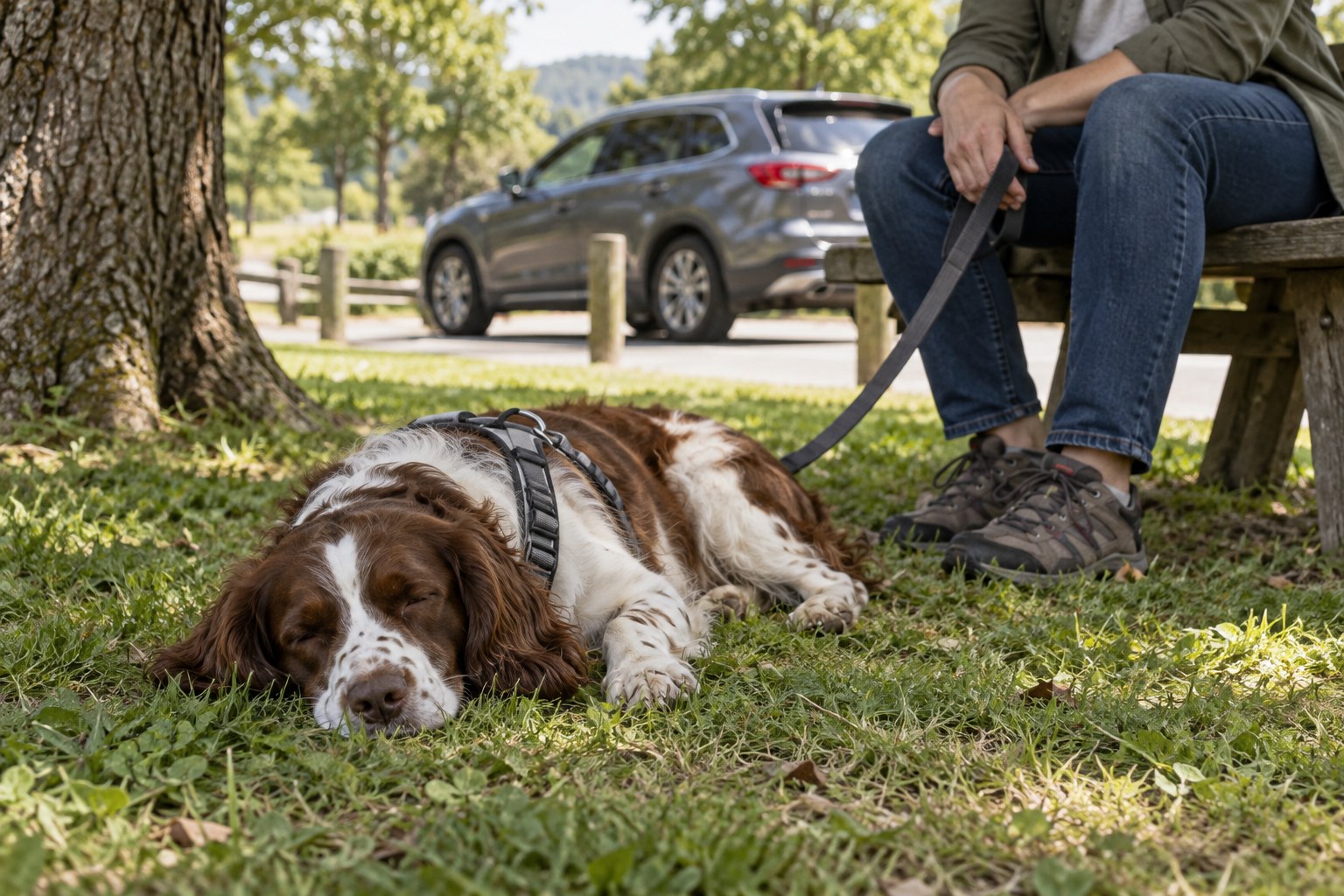
AI-generated illustration of a supervised rest break outside the vehicle.
Before changing the seat, check whether your dog can use its usual resting posture in the installed setup. Sitting throughout a journey is an observation, not a diagnosis, and sleeping is not a requirement for a successful ride.
In this guide
Compare with the way your dog rests at home
Watch your dog settle without prompting. Does it curl up, lie on its side or stretch its front legs forward? Note the space used in that position. A dog may fit while sitting yet have too little usable room to lie down. Compare that resting footprint with the cushion area inside the walls, not just the seat’s outside dimensions. Take measurements when your dog is comfortable; do not push its body into the bed to test a fit.
Check the cushion in the installed seat
Park securely and follow the exact seat instructions. Confirm that the cushion sits flat and its inserts are in the intended positions. After washing, a twisted cover or displaced insert can make the resting area uneven. Look for a raised seam, a wall folding inward or luggage pressing on the bed. Do not compensate with stacked pillows or improvised supports. If the standard configuration does not provide sufficient space, ask for another model’s usable dimensions.
Look at the harness and attachment route
With the vehicle parked and your dog supervised, check the permitted resting position with the approved restraint arrangement in place. A strap caught under a cushion or a connector resting where the dog lies needs attention. Follow the restraint maker’s instructions; never loosen or lengthen equipment beyond its approved configuration simply to make room. Comfort-seat padding and an included tether do not establish collision protection. Check independently tested equipment and compatibility separately.
Introduce the resting surface before departure
Let the dog explore the travel bed at home rather than presenting it for the first time beside a packed car. AAHA notes that familiar bedding can support travel comfort. That is general advice, not evidence that a particular Rofamily seat reduces anxiety. Keep the initial arrangement simple and allow voluntary contact. A familiar surface cannot solve an unsuitable fit, so check both familiarity and physical room.
Observe, pause and avoid a sleep target
A passenger can note whether the dog attempts to lie down and gets up again, or simply chooses to watch outside. The driver should keep attention on the road. Make observations while stopped if travelling alone. A supervised break outside the vehicle provides time to reassess the setup. Persistent discomfort deserves veterinary advice. Never leave a dog alone in a parked car. A sleeping dog is not proof of a medical benefit or crash protection; a comfortable ride can also involve quiet wakefulness.
Common questions
Should I buy the tallest booster to help my dog sleep?
No. Height changes the view, while resting comfort also depends on usable area, fit and the approved equipment configuration.
Can I add padding to a tested restraint system?
Only where the equipment manufacturer explicitly permits the combination. Do not assume an extra cushion is compatible.