First Dog Car Seat: A Gentle Introduction Before the First Ride
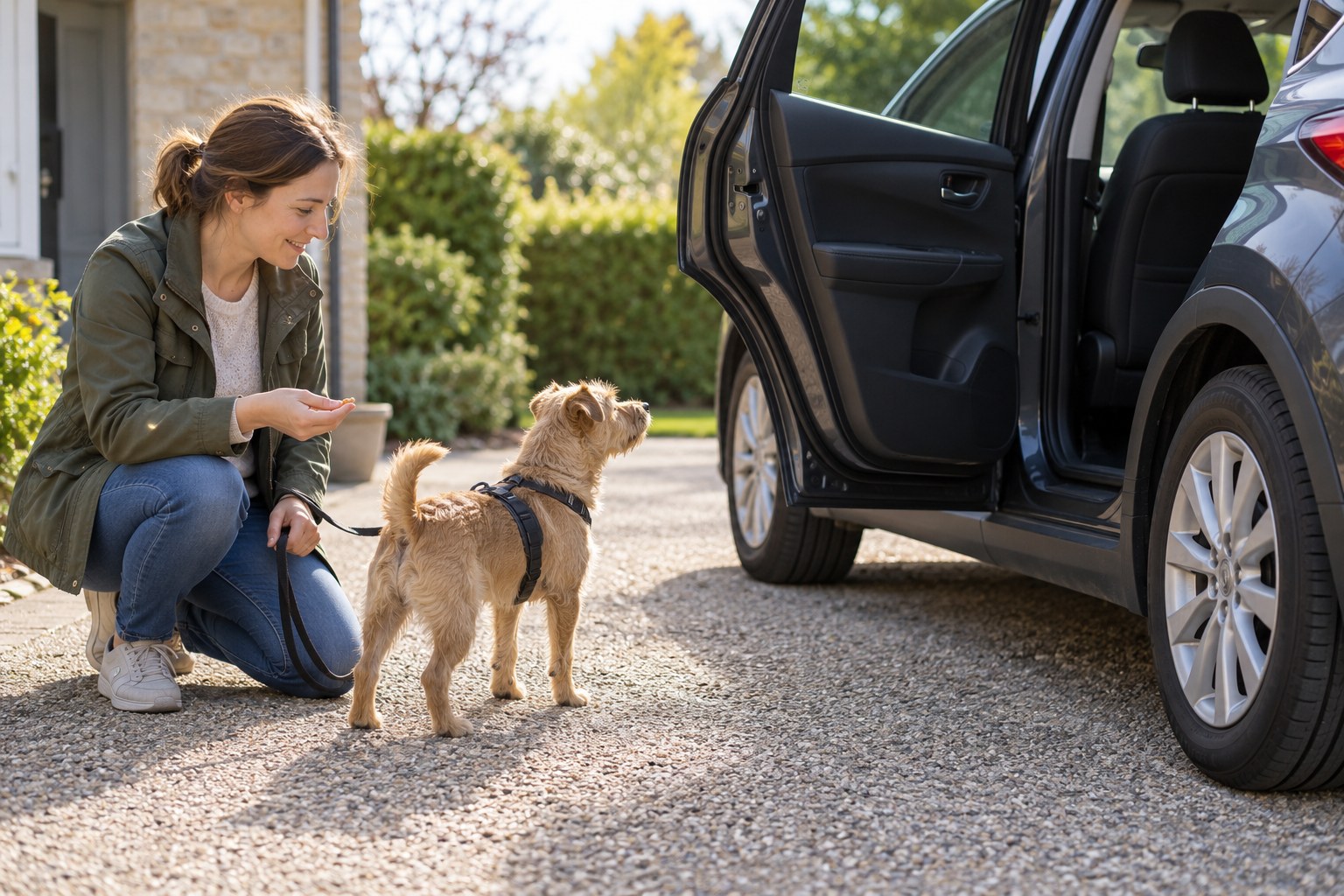
AI-generated illustration of supervised practice beside a parked car, not an installation demonstration.
Separate learning the new resting place from learning car travel. Start with voluntary exploration at home, then practise around a parked vehicle before adding movement. Advance according to your dog's response, not a fixed timetable.
In this guide
Start without the car
Place the travel bed on a stable floor where you can supervise. Let your dog sniff and approach without being pushed inside. Reward calm interest with something the dog enjoys. Keep early sessions easy and finish while the dog is still comfortable. Do not leave attachment straps where they could become a chewing or entanglement hazard. Familiar bedding may support travel comfort, but familiarity is not proof that a particular seat treats anxiety.
Practise the approach separately
At a quiet, safe location, reward voluntary approach to the parked car. Keep a loose leash attached to a suitable harness and allow space to move away. If the dog freezes or tries to retreat, increase distance rather than pulling it closer. This small exercise can be useful even before the dog enters. A calm approach is one milestone; it does not mean the dog is ready for a long journey.
Introduce the installed position while stationary
Install the seat according to its exact instructions and check usable space and restraint compatibility. Comfort padding or a supplied tether is not evidence of collision protection. Practise the intended arrangement only while supervised in a safely parked, temperature-controlled car. Never leave the dog alone there. Separate entering, wearing the restraint, closing the door and hearing the engine into manageable steps; do not add everything at once.
Add one easy journey, then review
Once the stationary steps are comfortable, try a brief, simple route with the correct restraint in use. Let a passenger observe; a solo driver should check only after stopping safely. Choose a quiet destination or return home, rather than making every trip a veterinary visit. VCA recommends gradual positive experiences, while AAHA advises test runs and familiar comfort items. These are general principles, not a guaranteed schedule.
Use a small progress log
Record the step, route, duration and observable behavior: voluntary entry, normal interest in rewards, repeated lip licking, drooling, trembling or attempts to escape. Do not score sleep or looking out the window as mandatory success. If distress appears, stop and return to an easier step next time. Persistent nausea, vomiting or marked fear needs veterinary guidance. Never force repeated exposure until the dog gives up; stillness alone does not establish comfort.
Common questions
How many days should the introduction take?
There is no universal number. Some dogs need many short sessions. Repeat an easy step instead of advancing solely because another day has passed.
Should I lure a frightened dog inside with food?
Avoid using food to pull a dog beyond what it can comfortably handle. Reward voluntary progress and seek professional help when fear persists.