Can Two Dogs Share a Car Seat? Questions to Check Before Traveling
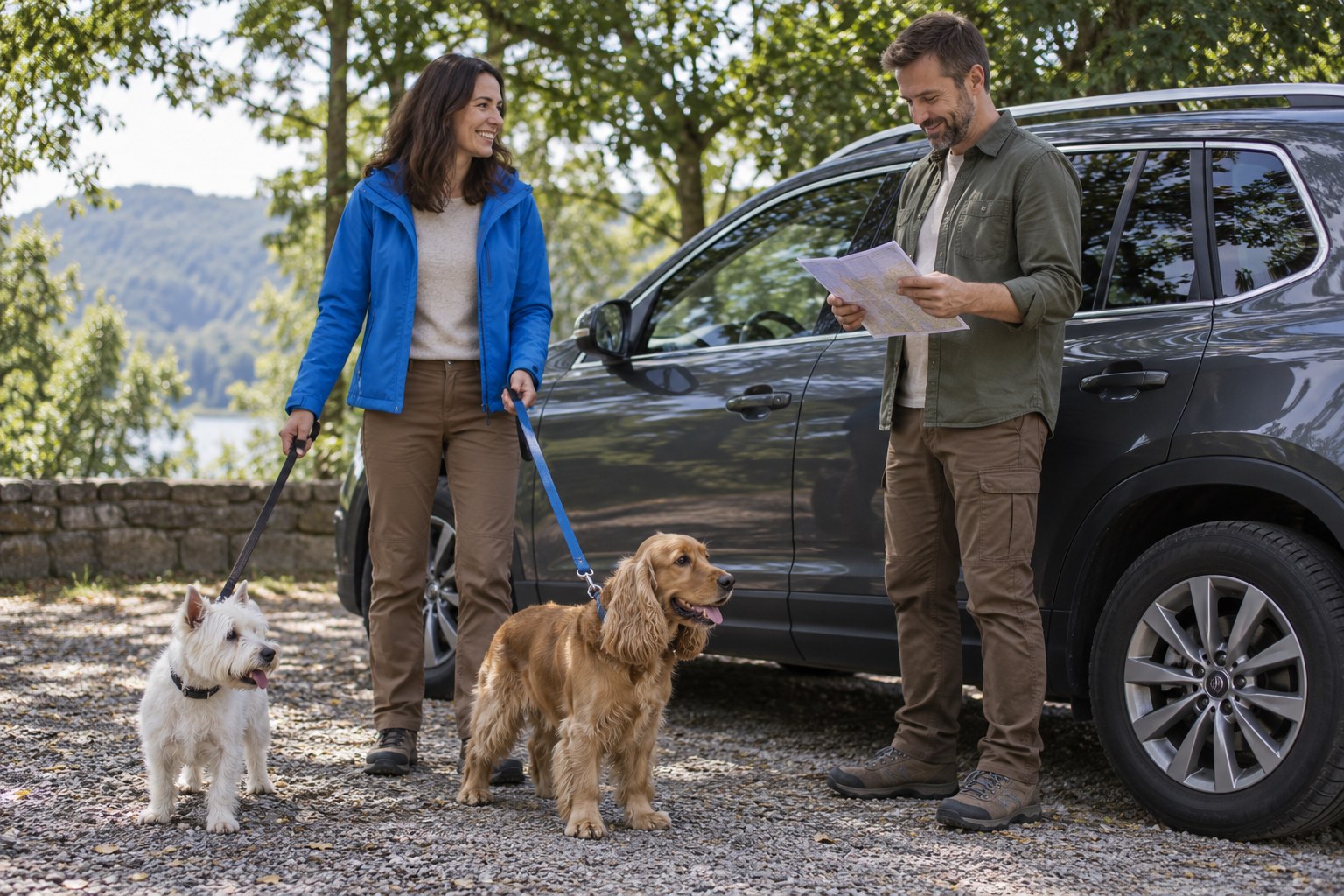
AI-generated illustration of preparing to travel with two dogs; not a restraint demonstration.
Do not assume two dogs can safely share a pet car seat just because they fit. Check the manufacturer’s occupancy and weight limits, each dog’s restraint and space, vehicle compatibility and how the dogs behave together. If any requirement is unclear, use separately secured arrangements and seek manufacturer advice.
In this guide
What one customer reported
In a customer-supplied Amazon screenshot, one person described two medium dogs riding together in a pet seat and said they appeared comfortable. The product model is not established. This individual account is not evidence of crash protection, suitability for other dogs, or a recommendation for all shared setups.
Check occupancy and usable space
First ask whether the exact product permits two dogs and whether its combined weight and dimensions are suitable. Each dog needs room to sit and lie in a natural position without the other blocking movement or ventilation. External dimensions alone do not establish usable space. If either dog crowds, guards space or cannot settle, plan separate areas.
Plan restraint for each dog
A padded bed and its comfort tethers are not automatically crash-tested restraints. Follow the vehicle, seat and restraint manufacturers’ instructions for each dog; use suitably fitted vehicle harnesses or secured carriers and ensure equipment is compatible. Do not connect two dogs to one restraint or invent an attachment method. If independent restraint cannot be arranged as directed, do not use the shared setup.
Practice with the car parked
Introduce each dog to its own travel equipment calmly before attempting the complete setup. In a parked vehicle, check that straps cannot tangle or press on necks, and that each dog can rest without being pinned by the other. Never leave the dogs unattended together in the car. Ask the manufacturer or a qualified trainer if you cannot assess the arrangement.
Watch both dogs throughout the trip
A passenger can watch for persistent panting, repeated movement, growling or one dog preventing the other from settling. Stop somewhere safe before making changes; never adjust equipment while driving. Offer separate, leashed breaks and water. If signs persist, consult a veterinarian or qualified behavior professional.
Common questions
Are two comfort tethers proof of crash protection?
No. Tethers can have different intended uses. Check documented restraint specifications and instructions for each dog.
Can friendly dogs always share?
No. Familiar dogs may still need separate space or restraints in a confined moving vehicle. Assess both dogs and the equipment individually.
Related: Rear-seat installation · Resting space on long trips
Sources
- AVMA: Traveling with your dog or cat (accessed 2 November 2026)
- RSPCA Australia: Dog vehicle restraints (accessed 2 November 2026)